The complete guide to surface preparation in Ocala, FL – what it is, why it makes or breaks a coating, and how we approach every surface across Marion County.
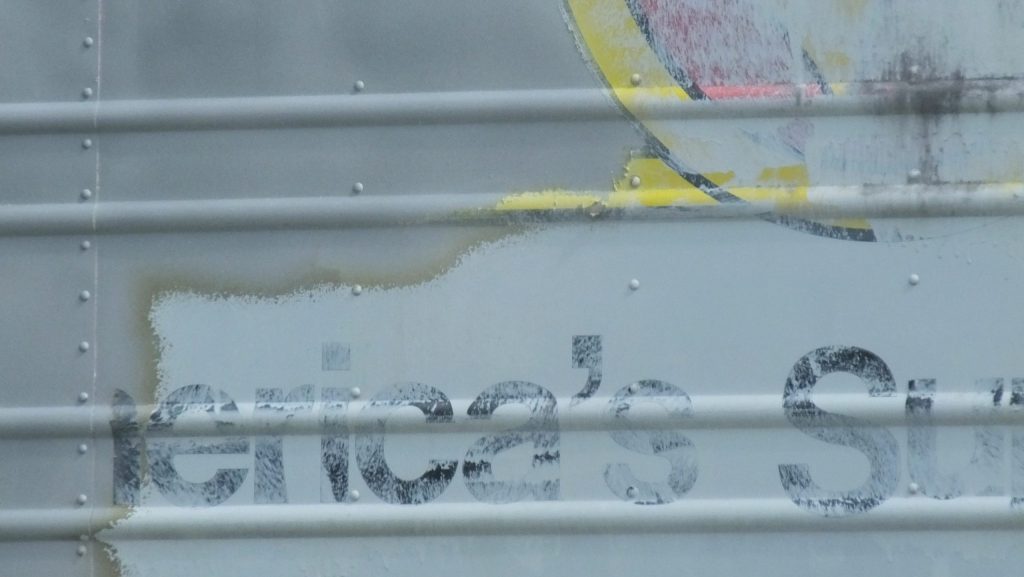
If there is one thing twenty-plus years of blasting steel, concrete, wood, and brick in Central Florida has taught us, it is this: the coating almost never fails because of the coating. It fails because of what happened underneath it.
This is the complete guide to surface preparation in Ocala – what it is, why it decides whether your paint lasts a decade or a season, and how we approach every surface across Marion County. Read it and you will know more than most contractors who quote these jobs.
Surface preparation is everything that happens to a surface before a coating goes on it: removing rust, old paint, mill scale, grime, and contamination, and leaving behind a clean, sound, properly textured surface that a primer or finish can actually grip. Sandblasting – more accurately, abrasive blasting – is the most reliable way to do that on most materials, because it does two jobs at once. It strips off whatever is in the way, and it leaves a profile, the fine roughened texture that gives coatings something to bite into.
Pressure washing cleans; chemicals dissolve; grinding scuffs. Only blasting reliably delivers clean and profiled in one pass.
The protective-coatings industry has studied its own failures for decades, and the verdict never really changes: the large majority of coatings that fail early fail because of inadequate surface preparation, not bad paint. A coating laid over rust keeps rusting underneath. A coating laid over a slick, unprofiled surface peels because it never had anything to hold.
A coating laid over a contaminated surface blisters as the contamination pulls moisture through it. Get the prep right and an ordinary coating lasts; get it wrong and the best coating money can buy still fails. That is why surface preparation in Ocala is where we spend our attention – it is the part nobody photographs and the part that decides everything.
Every material behaves differently under abrasive, and matching the approach to the surface is most of the craft.
Metal. Steel, iron, and aluminum are the bread and butter – gates, trailers, equipment, railings, structural members.
Our metal sandblasting strips rust and old coatings down to bright, profiled steel, and because this is Florida, we prime it the same day before it can flash rust.
Concrete. Slabs need the weak top layer and any old coating removed, plus a profile opened up, before epoxy or sealer will hold.
Our concrete blasting handles driveways, barn aisles, and shop floors and reads the slab for moisture before anyone coats it.
Wood. Barn siding, board fence, beams, and cabins want soft media at controlled pressure so the grain survives. Our wood sandblasting lifts gray weathering and old finish without gouging.
Brick and masonry. Paint, grime, and efflorescence come off brick, block, and stone with gentle media and a test patch first, so the mortar and the character survive.
That is our brick and masonry sandblasting.
When a surface is too delicate for grit altogether – thin aluminum, chrome, soft wood – we reach for gentle soda blasting, which strips without cutting into the material.
People assume one method is simply best. It is not – the surroundings and the surface choose the method, and an honest crew tells you which.
Dry blasting is fast and leaves a clean, dry surface ready to coat immediately – the right call out in the open where dust can drift harmlessly. Dustless (green) blasting mixes water into the media to suppress dust, which is the right call near barns, pools, neighbors, and occupied buildings. But dustless is not magic: the water leaves a wet, muddy residue that you cannot blow out of nooks afterward and must not coat over until it is dried and washed, because trapped moisture and salts will blister the finish.
The cleaning power is identical, and on our jobs there is no price difference between the two – we pick by the site, never by the invoice. Soda blasting is the gentlest of all, for surfaces you need to save rather than profile.
The abrasive matters as much as the method. Crushed glass is a sharp, eco-friendly workhorse for steel. Garnet cuts fast and leaves an excellent profile for demanding metal. Walnut shell and other soft organics clean delicate surfaces without damage.
Soda is gentlest, water-soluble, and safe around fuel and electrical parts. Glass bead polishes and finishes rather than aggressively stripping. The wrong media ruins a surface – too aggressive warps thin metal and scars brick; too soft wastes a day accomplishing little. We carry several and choose per surface, often using more than one on a single job.
Serious coating work is written to standards. The SSPC blast-cleaning grades – brush-off, commercial (SP6), near-white (SP10), white metal (SP5) – define exactly how clean a surface must be, and coating manufacturers warranty their products against those specs. Higher is not always better; it is about matching the standard to the service.
Profile matters too: coating data sheets call for an anchor pattern in a measured range, because too shallow will not grip and too deep cannot be covered. When a coating has to last, we prep to the standard it calls for and can tell you which one we are meeting. For the safety framework behind all abrasive work, the OSHA abrasive blasting standards govern how the job is done.
Central Florida is hard on bare metal in a way drier states are not. The moment steel is blasted to bright metal it starts re-oxidizing, and in our humidity a fresh haze of flash rust can form within hours. Coat over that and the job undoes itself.
The fix is non-negotiable: prime the same day you strip. We carry coatings on the truck precisely so nothing sits exposed, which is why our prep and our painting and protective coatings happen as one continuous job, by one crew, on one clock. Prep without protection, in this climate, is half a job – and the missing half is the expensive one.
If a structure predates 1978, lead paint is a real possibility, and blasting it without testing turns a coating job into a contamination problem. We ask the building’s age up front and recommend testing before scheduling. Certified lead abatement is its own regulated specialty that we do not perform – if a covered surface tests positive, we point you to certified pros rather than pretend.
The EPA renovation program is worth knowing for any older property. Testing is cheap; dust you cannot un-make is not.
Every job runs the same honest sequence. A free on-site assessment, where we look at the surface, the coating, the access, and the surroundings, and put a real number in writing. Setup and containment to protect what is nearby. Precision blasting with the media and pressure matched to your material.
A cleanup and inspection to verify the surface is clean and profiled. And, where the job calls for it, same-day priming so the work is sealed before Florida can move back in. If a project does not actually need us – if a wire brush and a Saturday will do – we will tell you that too.
We are fully mobile and bring the rig to you across Ocala and the surrounding towns: Belleview, Silver Springs, Summerfield, Dunnellon, Anthony, and Marion Oaks – farms, homes, and businesses alike.
If you want to go deeper on any single surface, our services overview and the guides on our blog break each one down.
Surface preparation is not the glamorous part of a coating project. It is the part that determines whether you are protected for years or repainting next season. Get it right, and everything on top of it lasts.
Planning a project? Call 352-723-0181 for a free, honest, on-site assessment anywhere in Ocala and Marion County, or request a quote online.
Tell us what you are coating and we will tell you exactly what prep it needs – free, on-site, anywhere in Marion County.