If your building predates 1978, lead paint safety has to come first. Here is honest lead paint safety guidance before any blasting is scheduled.
This is the one blog post where the most important advice is to slow down. If you own an older building in Marion County and you are thinking about blasting old paint off it, lead paint safety has to come before anything else – because abrasive blasting old lead paint without proper testing and controls can turn a straightforward coating job into a contamination problem that affects your soil, your family, and anyone working the site. We want to be completely honest about how we handle this, including the parts where the right answer is to stop and bring in a different specialist. Pretending lead is not a concern is how people get hurt, and we will not do it.
Lead Paint Safety Comes Before the Blast
Lead-based paint was banned for residential use in the United States in 1978, so the rule of thumb is simple: if a structure was painted before 1978, assume lead is possible until a test says otherwise. Plenty of older Florida farmhouses, barns, outbuildings, commercial structures, and ironwork carry old lead paint under newer coats. The age of the building is the first thing we ask about, every time, precisely because of this line. The federal EPA Renovation, Repair and Painting program exists around this exact risk and is worth a read for any older-building owner.
Why Blasting Lead Paint Is Different
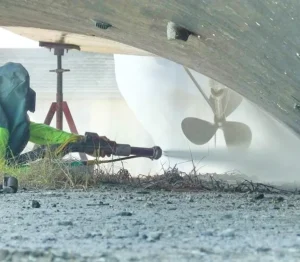
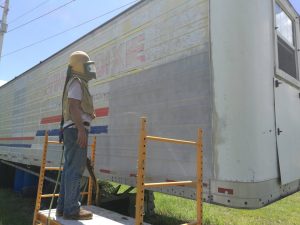
Here is the technical heart of the concern. Abrasive blasting does what it does by shattering coatings into fine particulate. With ordinary paint, that dust is a nuisance you control with suppression and cleanup. With lead paint, that same dust is a toxic hazard – lead particulate that can settle into soil, drift onto neighboring property, contaminate the work area, and pose a real danger to anyone breathing it, especially children. The very thing that makes blasting effective is the thing that makes blasting lead paint dangerous when it is done carelessly. That is not a reason to panic; it is a reason to test first and plan properly.
How We Actually Handle It
Our approach is straightforward and conservative. If a building predates 1978, we ask up front and recommend testing before any blasting is scheduled. Lead testing is inexpensive and fast relative to the cost of getting it wrong. If the test comes back clear, we proceed as a normal job. If it confirms lead, we are honest about the next part: certified lead abatement is its own regulated specialty, with its own containment, worker-protection, and disposal requirements, and we do not perform certified abatement. On a covered project where testing confirms lead, we will point you toward certified abatement professionals rather than pretend we can shortcut a regulated process. Testing is cheap; dust you cannot un-make is not.
What That Means for Your Project
For most owners this plays out in one of three ways:
- Newer structure or tested clear: we blast and coat normally – no lead concern, full speed ahead.
- Older structure, not yet tested: we recommend a test before we schedule, so everyone knows what they are dealing with.
- Confirmed lead on a regulated surface: we refer you to certified abatement specialists for the lead removal, and we are glad to handle the coating and protection work afterward once the surface is properly cleared.
None of this is meant to scare you off restoring an old building – old barns and ironwork are some of the best work there is. It is meant to make sure the restoration does not leave a hazard behind.
The Same Logic Applies to Old Masonry and Wood
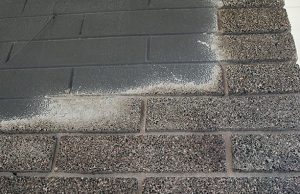
Lead is most associated with painted metal and trim, but old painted brick, masonry, and wood siding can carry it too. The same testing-first discipline applies before we strip a painted historic facade or old barn siding. Our brick and masonry blasting on older structures always starts with the age question, and once a surface is confirmed safe and stripped, our coating work protects it for the long haul.
When In Doubt, Test – We Will Tell You Straight
If you have an older property and you are not sure what is on it, call us before you do anything. We will ask the right questions, tell you honestly whether testing is warranted, and never schedule a blast that should not happen until the surface is cleared. Doing this right is not the expensive path. Doing it wrong is.
This article is general guidance, not regulatory or environmental advice; for a confirmed lead situation, work with a certified lead professional.
Need sandblasting in Ocala or anywhere in Marion County? Call 352-723-0181 for a free on-site estimate, or request a quote online.
On lead paint safety the rule is simple: test first, and never blast confirmed lead – that is certified abatement work.