Before anybody asks me what a job runs, they ask me when they get their stuff back. Fair question. If your horse trailer is sitting at the shop, you are not hauling anything. So: how long does sandblasting take? For most work we do around Ocala, the blasting itself is one to two days. The whole project — setup, blasting, primer, topcoat, cleanup — usually lands somewhere between half a day and four days.
Here is the honest part most people skip. The blasting is rarely the slow part. Masking, containment, weather, and coating cure time are what stretch a schedule in Marion County. A tractor bucket can be down to bright metal in ninety minutes. Getting it primed before the humidity gets to it is the actual race.
How Long Does Sandblasting Take? The Short Answer
Three buckets cover almost every call we get.
- Small stuff — a gate, a railing section, a set of wheels, a mower deck. Half a day on site, sometimes less.
- Medium jobs — a stock trailer, barn stall fronts, a two-car driveway, a piece of farm equipment. One to two days.
- Big jobs — a log home, a long run of board fence, commercial steel, a whole pool deck and cage. Three to five days, sometimes more.
Those are blast-plus-coat numbers, not blast-only numbers. If you only want bare metal and you are handling the paint yourself, cut roughly a third off. We would rather do both, and not because of the invoice — because bare steel in this county does not wait politely for another contractor’s schedule.
7 Real Ocala Timelines, Start to Finish
1. A gate, railing, or single ornamental piece — 2 to 5 hours
Wrought iron and light steel move fast. The clock goes to detail work, not stripping: taping off masonry, working scrollwork and pickets from multiple angles, then primer. Most single gates are blasted, primed, and topcoated in one visit.
2. A horse trailer or stock trailer — 1 to 2 days
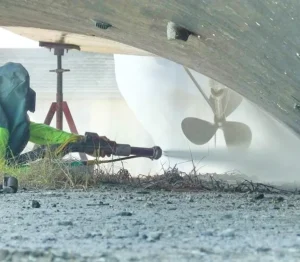
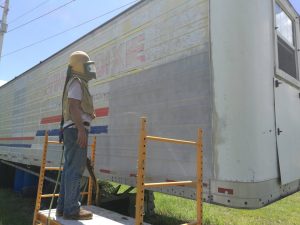
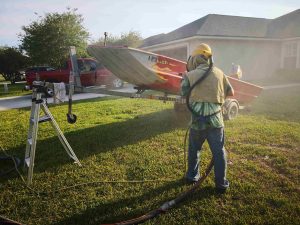
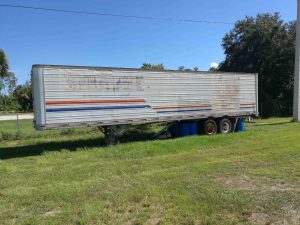
This is our bread and butter in horse country. A 16-foot bumper pull, stripped and recoated, is usually a day and a half. A 30-foot gooseneck with a rusted floor frame and aluminum skin runs two, sometimes three. Undercarriages are what add time — you cannot rush a frame you have to lie under.
3. Barn stall fronts and interior steel — 1 to 3 days
Depends entirely on whether the horses stay. Working around occupied stalls, with containment up and aisles kept passable, doubles the setup time. An empty barn aisle is a fast job. A full one is a careful one.
4. Farm equipment and implements — half a day to 2 days
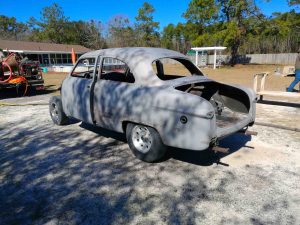
A bush hog or box blade is a half-day. A tractor with hydraulics, decals, glass, and a cab is a real masking job before a single grain of media flies. Straightforward metal sandblasting in Ocala on open frames goes quick; anything with seals and cylinders slows down for good reason.
5. A driveway, pool deck, or slab — 1 to 2 days
Concrete surprises people. Stripping old paint, glue, or a failed coating off a two-car driveway is often a single day of blasting. But concrete sandblasting and slab prep also means hauling spent media out and getting the profile right, and the new coating has its own cure window that no blaster controls.
6. Brick, block, or stucco — 1 to 2 days
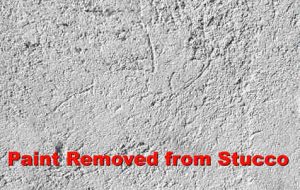
Masonry is soft and unforgiving. We run lower pressure and softer media, which means more passes and more time. A painted brick fireplace is a day. A full exterior wall is two.
7. Wood — ceilings, cabins, fences — 2 to 4 days
The slowest category, every time. Wood sandblasting is finesse work — too aggressive and you carve the grain out instead of cleaning it. Log homes and tongue-and-groove ceilings get worked slowly and inspected as we go.
What Actually Eats the Clock
When somebody asks how long does sandblasting take and I give a range instead of a number, this is why. Five things move a job:
- Coating layers. One coat of house paint comes off easy. Six coats of implement enamel over mill scale over old primer is a different animal.
- Access. Can the rig get within hose reach? A pasture in Anthony after a wet week is not the same as a paved shop lot.
- Substrate. Steel takes what you give it. Aluminum, wood, and masonry make you slow down.
- Containment. Neighbors, vehicles, landscaping, a pool ten feet away — all of it means more tarps and more time.
- What happens next. If we are coating, the schedule includes flash-off and recoat windows.
Why Florida Humidity Runs the Schedule
Bare metal here starts flash rusting before supper. On a August afternoon in Ocala you can watch a blasted panel bloom orange in under two hours. That single fact reshapes how long does sandblasting take on any steel job, because we will not blast more surface in a day than we can prime the same day.
So on a big steel project you get a rhythm: blast a section, prime that section, move on. It looks slower from the driveway. It is the only way the coating actually sticks. If somebody offers to blast your whole trailer Monday and come back Thursday to paint, ask them what they plan to do about the rust that shows up Monday evening.
Afternoon storms are the other one. June through September, we start early. Rain does not just stop the work — moisture on a freshly profiled surface means going back over it. When the forecast is ugly, dustless blasting can sometimes keep us working, though wet blasting brings its own trade-offs with slurry and rinse-down time.
The Hours Nobody Counts
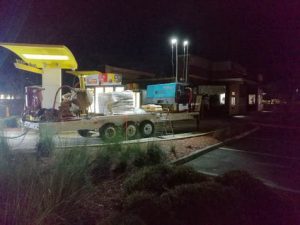
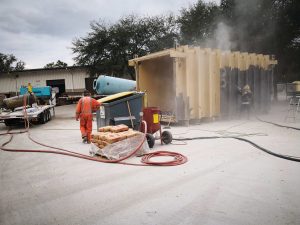
Setup and cleanup are real work. On a residential job, masking windows, covering the AC unit, tarping off a truck, and running containment can take two hours before the compressor comes up to pressure. Cleanup at the end — sweeping and hauling spent media, pulling tarps, verifying nothing got peppered — is another hour or two.
There is also the safety side, which is not optional. Respiratory protection, blast hoods, and controlling dust for everyone on site are governed by real standards, and OSHA’s abrasive blasting requirements are worth a look if you are curious what a legitimate crew is doing behind all that plastic. Anyone quoting you a suspiciously fast job is usually skipping one of these steps.
4 Ways to Make Your Job Go Faster
- Empty it and clear around it. Move the tack, the tools, the trailer, the potted plants. Every minute we spend shifting your stuff is a minute not blasting.
- Fix the metal first. If a floor needs welding or a panel needs replacing, do it before we come, not after we prime.
- Decide on the finish up front. Knowing the coating means we bring the right media and hit the right profile the first time.
- Give us water and a place to park. Sounds small. Saves an hour.
When we can blast and then prime and topcoat with the same crew the same day, the whole timeline usually tightens by a full day, because nobody is waiting on anybody.
When We Will Tell You to Wait
Sometimes the right answer is not this week. If a cold front is dropping surface temps below what your coating’s data sheet allows, we wait. If you have three days of rain coming and the piece has to sit outside bare, we wait. If a wire brush and a Saturday will handle the one rusty spot on your gate, we will tell you that too and you can keep your money.
We would rather push your job a week than hand you a coating that fails in eighteen months. The schedule is not the point. The finish is.
So the next time you wonder how long does sandblasting take, the useful answer is: less time than you think for the blasting, more time than you think for everything around it. Give us the piece, the coating you want, and where it lives, and we will give you a real day count before we start.
Need sandblasting in Ocala or nearby? Call (352) 723-0181 for a free on-site estimate. You will reach someone who actually does the work.