Dustless blasting car restoration is the first thing most Ocala hobbyists ask about once the project car has been sitting under a pole barn long enough to grow a fur coat of surface rust. You bought the fender, the frame, the whole sad Mustang, and now you need the paint and the rust gone without wrecking the metal underneath. Dustless blasting can do that. It can also do real damage if the wrong person runs the nozzle. Here is how we think about it.

Marion County has no shortage of old iron. Tractors, farm trucks, pickup beds, trailers and the occasional barn-find coupe. Cars are different from all of that, though. Sheet metal on a car is thin, and thin metal does not forgive mistakes. So this post lays out six rules we follow before we blast a single panel.
Rule 1: Understand What Dustless Blasting Car Restoration Actually Is
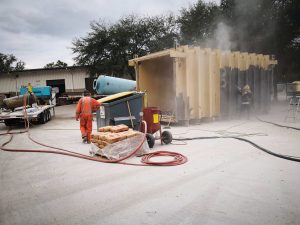
Dustless blasting mixes the abrasive into a stream of water. The water captures the dust at the nozzle, which is why it is called dustless. It is not magic, and it is not gentle by default. The pressure and the media you pick decide whether you get a clean, lightly textured panel or a warped, pitted one.
Here is the honest part most people skip: dustless blasting trades one problem for another. You lose the dust cloud, and you gain a wet, gritty slurry. That slurry has to be caught, cleaned up and hauled off. On a car part it also means the bare metal is wet the moment it is stripped. Which brings us to the thing that ruins more restorations than anything else.
Rule 2: Flash Rust Starts Before Supper
Bare steel in Florida humidity starts to flash rust within hours. Add water from the blasting process and it can be minutes. A fender stripped to shiny metal in the morning can have an orange haze by lunch. That haze is not a disaster, but it has to be dealt with before any primer goes on.
There are two ways to handle it. Use a rust inhibitor in the blasting water so the metal stays clean longer, then prime on the same day. Or blast dry and prime straight away. We cover the chemistry in our post on flash rust on bare steel in Ocala. The short version is simple: do not strip anything you cannot coat quickly. If you cannot prime today, do not blast today.
Rule 3: Thin Sheet Metal Warps
A frame rail can take a beating. A quarter panel cannot. Concentrate pressure and heat on thin steel and it will oil-can, ripple and stretch, and no amount of body filler fixes a panel that has been blasted wrong. This is why we adjust pressure, stand-off distance and angle for every part, and why we test a hidden spot before touching anything visible.
Dustless blasting is generally easier on thin metal than dry blasting with coarse media, because the water cushions the impact. Easier is not the same as safe. A hood, a roof or a door skin needs a light touch and a soft abrasive. A frame, a differential housing or a bumper bracket can take a lot more. Matching media to the part is the whole job, and it is why a blanket price for “one car” never makes sense to us. Our metal sandblasting in Ocala work covers everything from heavy steel to lighter sheet, and the method changes with the thickness.
Rule 4: Choose the Right Media for the Part
Not every part wants the same abrasive. For heavy frames, axles and suspension components, a harder media gets the job done fast and leaves a good profile for primer to grip. For sheet metal, a finer, softer media is the safer choice. For delicate or mixed-material pieces, such as aluminum trim, chrome-adjacent parts or cast housings, soda blasting removes paint and grime with far less risk of scarring the surface.
Chrome, glass, rubber, wiring and anything you want to keep intact should be removed or masked before the part comes anywhere near a nozzle. A stripped-down car is a good blasting candidate. A fully assembled car is not. We will tell you straight if your project needs more disassembly first, and we would rather you spend an extra weekend with a wrench than have us blast around parts that should have come off.
For the full breakdown of how each abrasive behaves, see our comparison of garnet, coal slag and glass bead.
Rule 5: Check the Old Paint and the Old Body Work
A car that has been repainted three times carries three layers of history. Old lacquer, enamel, primer, and sometimes a thick layer of body filler hiding something ugly. Blasting strips all of it, which is the point, and it also reveals everything. Pinholes, rust-through, old collision repairs and weld seams all show up the moment the paint is gone.
Be ready for that. Sometimes a clean-looking car turns out to be mostly filler, and no, that is not our fault. It is just what is underneath. We also stay alert to older coatings that may contain lead, particularly on cars from before the late 1970s. The EPA lead paint guidance explains what is involved, and our write-up on lead paint safety on older Florida buildings covers the practical side. Testing first is cheap. Guessing is not.
Rule 6: Have the Plan for After the Blasting
The blasting is the middle of the job, not the end. Before a part goes on the trailer, you should know where it is going next. Primer shop, body shop, your own garage, whatever the plan is, the clock starts ticking the second the metal is bare. In Ocala summers that clock is short.
We blast and coat with the same crew, so a frame or a set of parts can be stripped and primed the same day when conditions allow. If you are taking the parts to a body shop for paint, tell us, and we will leave them in the right condition and primed or inhibited as needed. If you plan to powder coat, say so up front, because the surface prep is different. We do not do the powder coating itself, and we will not pretend to, but we will prep the steel properly so your coater has a good starting point. You can read more about that in our post on surface prep before powder coating.
For parts we are painting ourselves, our painting services in Ocala cover primer and coatings on prepared metal.
When Dustless Blasting Is the Wrong Call
We are going to say it plainly. If you have a small patch of surface rust on a single panel, a wire wheel, a rust converter and an afternoon might be all you need. If the car is a rolling parts bin held together by body filler, blasting will just show you how much work lies ahead. And if you want a perfect, glass-smooth show finish on a roof or hood, the final work still happens with sanding, filler and paint, not a nozzle.
Dustless blasting car restoration earns its place on frames, floor pans, suspension parts, bumpers, brackets, wheels and heavier body components, where the goal is clean bare metal and a good profile for primer. It is also a strong choice when you do not want a cloud of dust drifting across a shop or a neighbor’s yard. Our dustless blasting service in Ocala is built for exactly that kind of work, and we will tell you which method suits your parts.
What a Car Project Looks Like With Us
We start by looking at the parts, not the whole story. We check the metal thickness, the condition of the old coating, and what you plan to do next. We test a small hidden area and show you the result before we go further. Then we give you a written plan covering the method, the media and the finish, and we tell you what we think can go wrong. If your parts are too thin or too far gone to blast safely, we will say so before anyone gets paid.
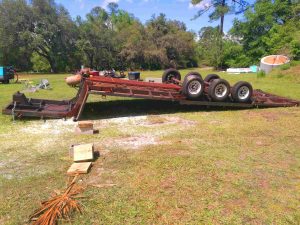
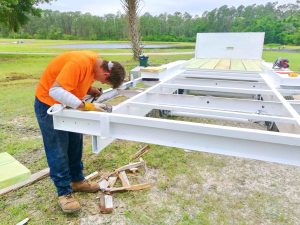
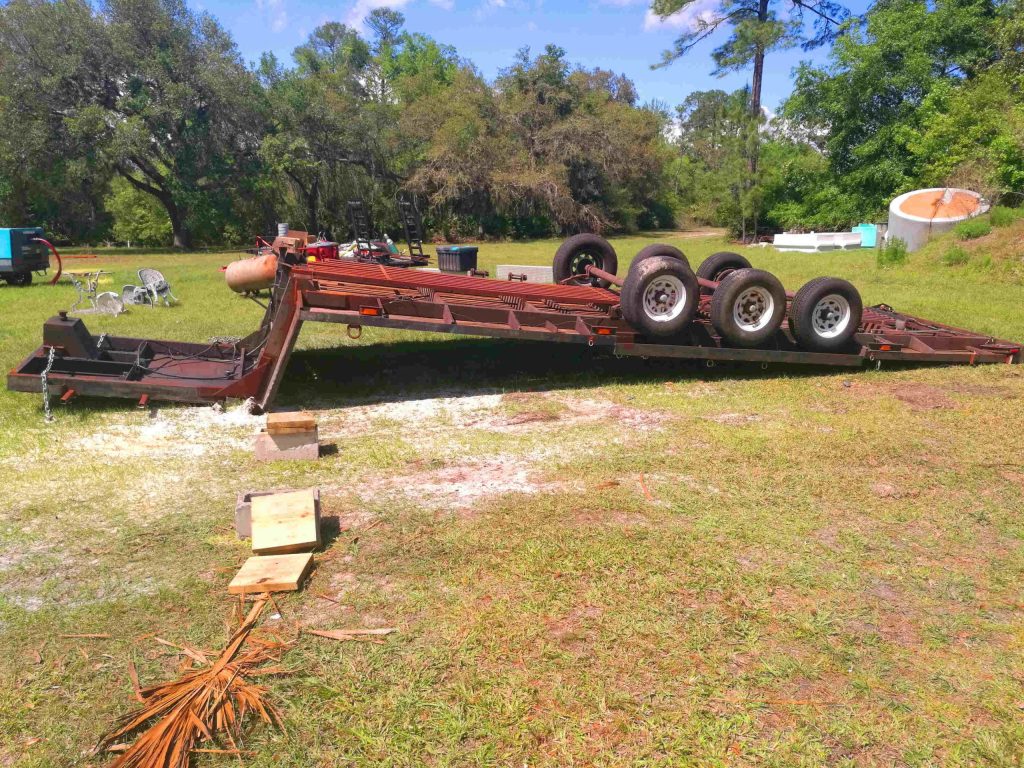
Because our rig comes to you, bulky items such as frames, bodies on a rolling chassis and trailers do not have to be hauled across Marion County first. The crew can work at your property, and you keep control of your project the whole time.
For more on the safety side of abrasive work, the OSHA abrasive blasting overview is worth a read.
The Short Version
Know that dustless means wet. Beat flash rust the same day. Respect thin metal. Match the media to the part. Expect surprises under the paint. Plan the finish before you start. Follow those six rules and dustless blasting car restoration gives you clean, honest metal to build on. Skip them and you will be redoing the work next summer.
Ocala Sandblasting | (352) 723-0181 | https://ocalasandblasting.com/
Need sandblasting in Ocala or nearby? Call (352) 723-0181 for a free on-site estimate. You will reach someone who actually does the work.