Somebody tagged your wall overnight and now you are standing in the parking lot wondering what gets it off. Here is the short version: graffiti removal sandblasting is the most reliable way to take spray paint off block, brick, and concrete in Ocala, because it does not just clean the surface — it takes the paint out of the pores where it actually lives. But it is not the right answer for every wall, and anyone who tells you it is has not blasted enough of them. Below are seven honest facts we give Marion County property owners before we ever fire up the pot.
1. The Paint Is in the Pores, Not on Top
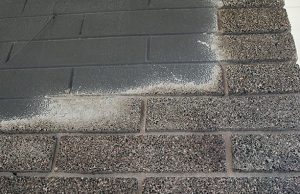
Spray paint on a concrete block wall is not sitting on the surface like paint on a car door. Block and concrete are porous — under a magnifier they look like a sponge. The pigment wicks down into those voids the second it hits the wall, which is exactly why a pressure washer leaves you with a faded ghost of the tag instead of a clean wall. Abrasive blasting mills off a thin layer of the substrate along with everything soaked into it. That is the difference. It is also why concrete sandblasting is our tool of choice for tagged retaining walls, dumpster enclosures, and the painted block you see behind half the strip centers on Pine Avenue.
2. The Wall Matters More Than the Paint
Here is the honest part most people skip: we care less about what is on the wall and more about what the wall is made of. Poured concrete and modern block will take an aggressive media and shrug it off. Old brick will not. Ocala’s historic downtown has plenty of soft, pre-war brick with a hard fired skin on the outside — blast through that skin with coarse media and the brick underneath drinks water for the rest of its life. On those walls we drop the pressure, switch to a fine media, and slow down, the same way we approach any brick sandblasting job on an older building. If a wall is too fragile to blast responsibly, we will tell you that on the estimate, not after.
3. Shadowing Is Real — Sometimes You Repaint Anyway
We will not promise you an invisible repair, because on some surfaces there is no such thing. Blast a tag off a wall that has baked in the Florida sun for fifteen years and the cleaned patch can read slightly brighter than the surrounding surface — the trade calls it shadowing or ghosting. On raw concrete it usually blends within months of weather. On a painted wall, the fix is simple: we blast the graffiti out, then recoat the whole face so it reads as one clean plane. Since we handle painting services with the same crew, the wall gets blasted and recoated in one visit instead of you chasing a second contractor.
4. Graffiti Removal Sandblasting Is a Media Game
The words say sand, but nobody serious blasts with beach sand anymore — OSHA’s abrasive blasting guidance is blunt about the silica hazard, and there are better tools anyway. For graffiti work we pick media by the wall, never by habit. Crushed glass cuts paint out of concrete fast and leaves no embedded grit. On delicate substrates — soft brick, limestone sills, anodized metal — soda blasting earns its keep, because baking soda shatters on impact and takes the paint without chewing the surface. Same crew, same rig, different media in the pot. We pick by the job site, never the invoice.
5. Occupied Property? Wet Blasting Keeps the Dust Down
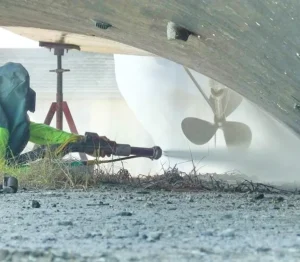
A dry blast on a big wall throws a visible dust plume, and if your building is an operating storefront, a church, or a school, that plume is a problem. Wrapping water around the abrasive knocks the dust down by a wide margin — that is the core of our dustless blasting setup. The trade-off is honest: wet blasting leaves a slurry that has to be contained and cleaned up, and the wall needs to dry fully before any coating goes on. For a tagged wall next to an open dining patio, that trade is worth it every time. For a block wall behind a warehouse in the industrial park off SW 44th, dry is faster and cheaper to clean up. We will tell you straight which one your job wants.
6. The Real Fix Is What Goes on After
Taggers come back. Ask anyone who owns a wall facing a right-of-way. The smartest money in graffiti removal is spent after the blast: a sacrificial or non-stick anti-graffiti coating means the next tag wipes or washes off instead of soaking in, and a plain high-build masonry coating at least keeps the paint out of the pores so round two is easier than round one. Because we blast and coat with one crew, the wall can be stripped, dried, and sealed without a handoff. One crew, one schedule, no finger-pointing between the blaster and the painter.
7. When Not to Call Us
Some graffiti does not need a blast rig, and we would rather tell you that than sell you one. Fresh paint on a sealed metal door or a glass storefront usually surrenders to solvent and a rag in twenty minutes. A small tag on a wall that is already scheduled for repaint just needs a stain-blocking primer and a roller. And city property — signal boxes, bridge abutments, park walls — is often the city’s job to clean; report it before you spend your own money. If a Saturday and some elbow grease will genuinely solve it, we will say so on the phone. The honest no is why people call us back for the jobs that do need us.
How a Graffiti Job Goes in Marion County
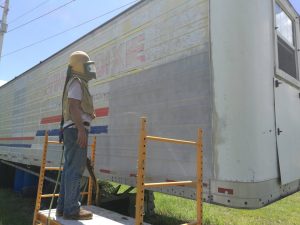
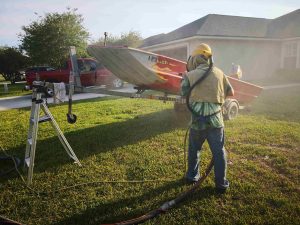
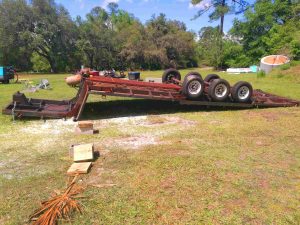
The process is not complicated, but the order matters. We walk the wall first and test a small patch — media, pressure, and standoff distance get set by how that patch behaves, not by a formula. We mask windows, fixtures, and landscaping, lay containment for the spent media or slurry, and blast from the edges of the tag inward so we are not chasing overspray. On painted walls we feather the edges so the recoat lays down clean. Then the spent media gets swept, bagged, and hauled off — it does not stay in your flower bed. Most single-wall jobs in and around Ocala are done in a day, and because the rig is fully mobile, that includes the block wall at the back of a horse farm off Highway 27 just as easily as a storefront downtown.
One more Florida-specific note: humidity here is not your friend. A blasted wall left bare through a summer week starts growing mildew in the fresh-opened pores. If the plan includes recoating, we schedule the coating tight behind the blast — clean, dry, sealed, done.
Older Buildings: Check What Is Under the Graffiti First
One more thing we check before blasting any building put up before 1978: the coating under the tag. Plenty of older commercial walls around Marion County carry layers of old paint, and some of those layers contain lead. Blasting lead paint without containment puts dust where it must never go, and the EPA’s Renovation, Repair and Painting rules exist for exactly that reason. This is not a scare line — most graffiti jobs are on bare block or modern coatings and it never comes up. But if your building is old enough to vote several times over, we test first. If lead is present, the job gets containment, collection, and proper disposal, or it gets a different method entirely. A blaster who does not ask the age of your building is not being efficient. He is being careless with your property and his crew.
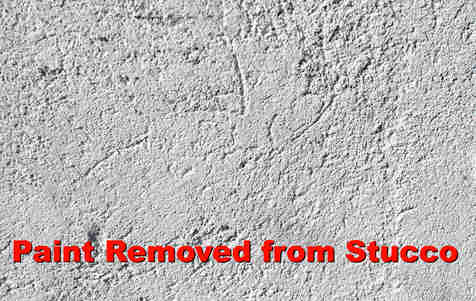
The same first-look applies to stucco. Ocala has a lot of block dressed in stucco, and stucco varies wildly in hardness. A test patch tells us in two minutes whether the wall wants abrasive, soda, or nothing stronger than a chemical gel and a rinse. Two minutes of testing beats an hour of regret.
Get the Tag Gone
Graffiti removal sandblasting is one of those jobs where the right call depends entirely on your wall — the material, the coating history, and what you want it to look like when we leave. We have blasted paint off concrete, block, and brick all over Marion County, and we will give you a straight answer about whether blasting, soda, or a rag and solvent is the right tool. Need sandblasting in Ocala or nearby? Call (352) 723-0181 for a free on-site estimate. You will reach someone who actually does the work.