Sandblasting aluminum is a different job than blasting steel, and if the person holding the nozzle doesn’t respect that difference, you can watch a good trailer get ruined in an afternoon. Around Ocala, aluminum is everywhere. Stock trailers and horse trailer skins. Pontoons and jon boats that live on Lake Weir and the Ocklawaha. Tractor-trailer bodies, diamond plate toolboxes, farm gates hung on every board-fenced lane in Marion County. We blast a lot of it, and we have also been called out to look at jobs where somebody hit thin aluminum with coal slag at full steel pressure and left the panels dimpled like a golf ball. That damage does not buff out.
So here are the honest dos and don’ts — the same things we would tell you standing next to your trailer in the barn aisle.

Why aluminum is not steel
Steel is forgiving. It is hard, it carries mill scale and rust that want aggressive media, and the whole point of blasting it is usually to cut an anchor profile so a coating can bite. Aluminum is the opposite animal. It is soft — a fraction of the hardness of steel — so abrasive that merely cleans steel will dig trenches in aluminum. It is thin where it matters most, like trailer skins and boat hulls. And it never really sits there bare: the moment you expose fresh aluminum to air, it starts forming an oxide layer again. That layer is why aluminum does not rust like steel, but it is also why paint peels off aluminum that was not prepped and primed correctly.
One more difference the brochures skip: heat. Aluminum moves with heat far more than steel does. Park a blast nozzle in one spot on a thin panel and you are not just removing paint — you are warping the panel. Once a trailer skin oil-cans, no amount of paint hides it.
7 honest dos and don’ts of sandblasting aluminum
1. Do pick a media made for soft metal
Glass bead, crushed glass, walnut shell, and soda all have a place on aluminum. Coal slag and steel grit do not. Those are steel abrasives — they cut fast and deep, which is exactly what you do not want on a metal this soft. Media choice is most of the battle. Get it right and the paint comes off while the metal underneath stays flat and clean.
2. Don’t run steel pressures
The pressure that strips a rusty steel implement will destroy an aluminum panel. On aluminum we drop the pressure, open up the distance between nozzle and metal, and keep the gun moving. It takes a little longer. That is the price of giving the trailer back in better shape than we found it.
3. Do watch thin panels like a hawk
A steel fender shrugs off a moment of sloppy technique. An aluminum horse trailer skin does not — some of those panels are thinner than a credit card. This is where experience earns its keep: reading the metal, feeling for heat, working in passes instead of camping on one spot. On the thinnest skins, honestly, the right call is sometimes not to blast at all and to strip them another way. We will tell you that before we ever fire up the pot.
4. Don’t expect a steel-style anchor profile
On steel we blast to standards — the SSPC surface prep standards spell out exactly how clean and how rough the surface should be. Aluminum takes a much shallower profile, and coatings need help sticking to it. That means a self-etching or epoxy primer made for aluminum, not whatever rattle can is on the shelf. Skip that step and the new paint will let go, usually within a Florida summer or two.
5. Do prime it the same day
Bare steel around here starts flash rusting before supper. Aluminum will not rust, but it is not off the hook — freshly blasted aluminum starts rebuilding its oxide layer within hours, and primer bonds far better to fresh metal than to day-old oxide. Same-day priming is the rule either way. It is also why we blast and coat with one crew instead of leaving your metal bare while you hunt for a painter. Our painting and coating service in Ocala exists for exactly this reason: strip it and seal it in the same visit, no finger-pointing between two companies.
6. Don’t blast aluminum you want shiny
Blasting leaves a uniform matte or satin finish. On a lot of jobs that is exactly the look people want — it hides scratches and takes paint beautifully. But if you are picturing a mirror-polished pontoon or bright diamond plate, blasting is the wrong tool, and we will say so. Polishing is a different trade. We would rather lose that job than hand you a dull trailer you expected to gleam.
7. Do know when not to blast at all
Light chalky oxidation on a gate or a few paint drips on a toolbox may need nothing more than a Scotch-Brite pad and a free Saturday. If a wire brush will do the job, we will tell you that on the phone and save you the service call. The honest no is how we earn the next yes.
The right media for sandblasting aluminum
People ask what we load in the pot for aluminum, so here is the plain-English version:
- Glass bead — the workhorse for a clean satin finish on castings, wheels, and parts. Gentle, uniform, leaves aluminum looking freshly milled.
- Crushed glass — good general paint stripper on heavier aluminum sections when we need more cut than bead gives, still far kinder than slag.
- Soda — the gentlest option we run. It removes paint and grime with almost no effect on the metal underneath, which makes it the pick for delicate skins, engine parts, and anything we absolutely cannot warp. That is its own service for a reason — see our soda blasting in Ocala page for where it wins.
- Fine garnet — reserved for thick aluminum with stubborn coatings, run carefully at reduced pressure.
We pick the media by the job, not by what happens to be cheapest that week. The metal tells us what it wants.
Aluminum jobs we see around Marion County
Horse country runs on aluminum, which keeps this part of our calendar full. The jobs that come through most often:
- Stock and horse trailers — skins, frames, fenders, and ramps, stripped for repaint or repair. This is thin-panel work, the exact place technique matters most.
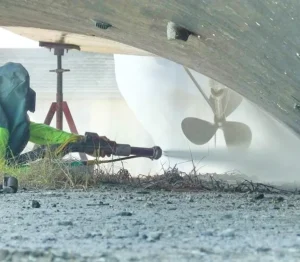
- Boats — we have stripped 16-foot aluminum jon boats down to clean hull, and pontoon logs and trailers off the local lakes.
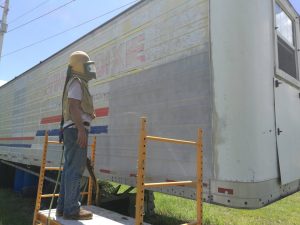
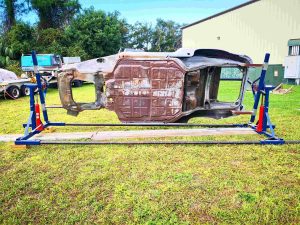
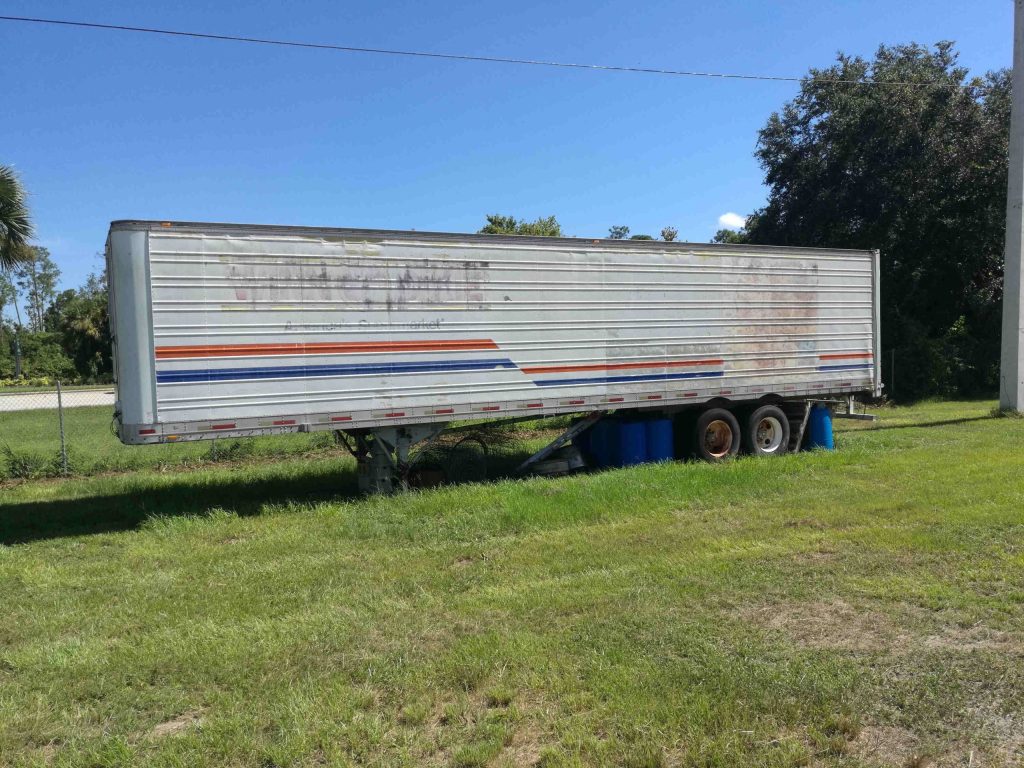
- Tractor-trailer bodies — full aluminum box bodies stripped for refinishing, like the one in the photo above.
- Farm gates, panels, and railings — oxidized and painted aluminum around barns and paddocks, brought back to a paintable surface.
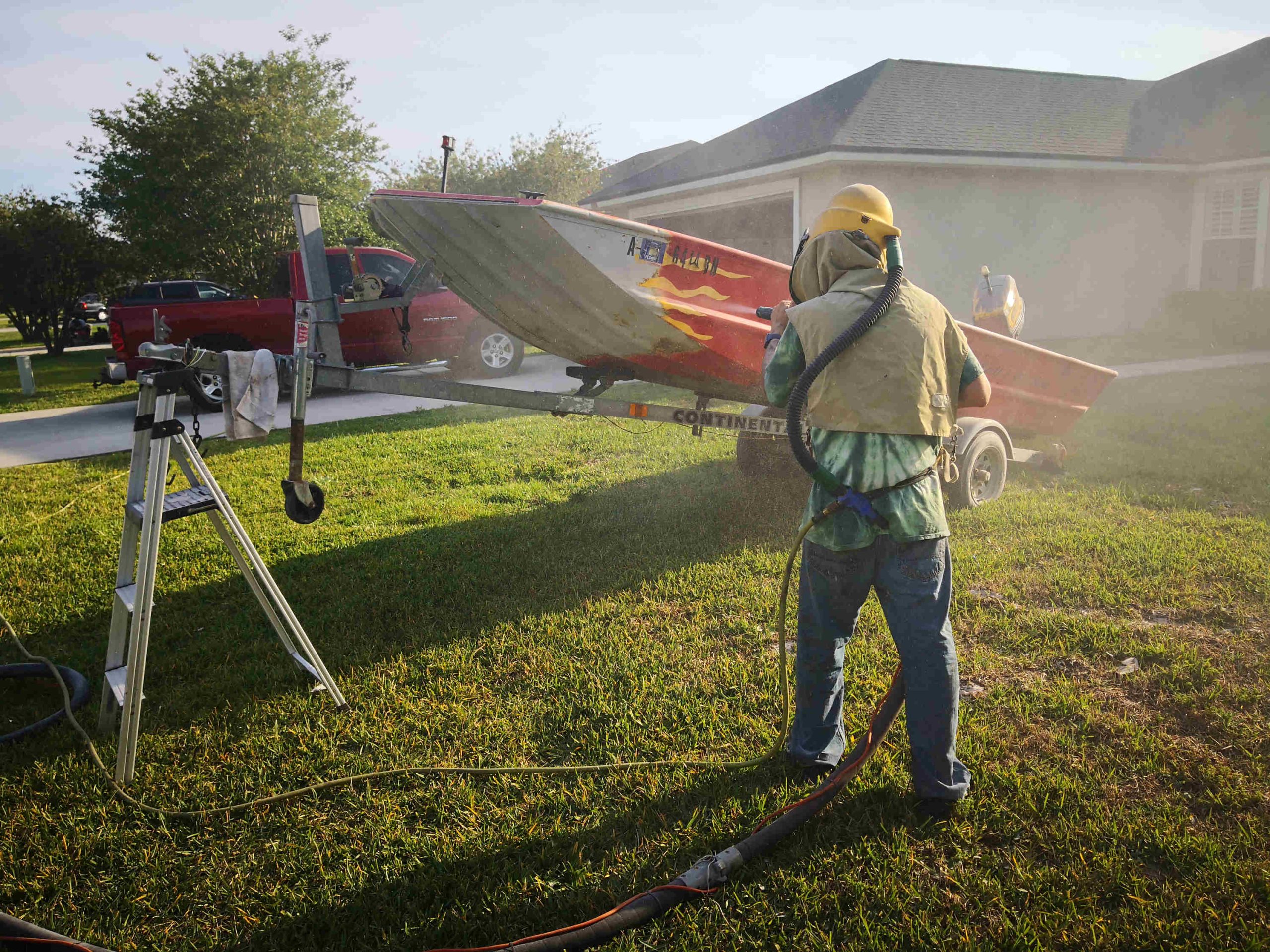
All of it happens at your place, not ours — the rig comes to the barn aisle, the driveway, or the equipment yard. For the full picture of what we strip and coat on metal, our metal sandblasting service in Ocala page covers steel and aluminum both.
Safety, dust, and doing it right
Abrasive blasting is regulated work for good reason. OSHA publishes the rulebook on abrasive blasting hazards and protection, and it applies to aluminum jobs the same as steel: respiratory protection, containment of spent media and old coatings, and keeping bystanders — two-legged and four-legged — out of the work zone. On farms we tarp and contain so spent media does not end up in a paddock. If the old paint on your trailer or building might predate the late seventies, lead comes into the conversation and the containment gets stricter. We are licensed and insured, and we treat that as the floor, not the ceiling.
Straight answers before you strip that trailer
Sandblasting aluminum rewards patience and punishes shortcuts. The right media at the right pressure gives you a flat, clean, paintable surface. The wrong ones give you warped panels and a story you will be telling for years. If you are not sure which side of the line your project sits on, describe it to us on the phone — the trailer, the boat, the gate, whatever it is — and we will tell you straight whether it wants bead, soda, or a Scotch-Brite pad and a Saturday.
Need sandblasting in Ocala or nearby? Call (352) 723-0181 for a free on-site estimate. You will reach someone who actually does the work.